
Fender Mustang LT25: A Comprehensive Guide
The Fender Mustang LT25 offers diverse tones, from British crunch to metal distortion and classic tweed cleans, making it ideal for exploring various musical styles.
The Fender Mustang LT25 is a versatile modeling amplifier designed for both beginners and experienced guitarists seeking a wide range of tones. It’s a fantastic platform for discovering your sound, offering a user-friendly interface and a plethora of built-in amp models and effects. Many users, even those with other Fender equipment like Squier Affinity Telecasters and Champion 20 amps, find the LT25 surprisingly adaptable.
Its strength lies in its ability to emulate classic amplifiers – British, Metal, and Tweed – providing a sonic palette suitable for diverse genres. The journey of sound discovery with this amp can last months, as players continually uncover new settings and voices they enjoy. It’s a great starting point for tonal exploration!
Understanding the Amplifier’s Features
The Fender Mustang LT25 boasts a comprehensive feature set centered around its amp modeling technology. Users can select from a variety of amplifier “voices,” including British (Orange & Green), Metal (Red, Green & Black), and Tweed (Green) options, each offering distinct tonal characteristics. Crucially, these voices are shaped by adjustable Gain, Treble, and Bass controls, allowing for precise EQ shaping.
Beyond amp models, the LT25 includes built-in effects like reverb, chorus, and delay, further expanding its sonic capabilities. Pickup selection plays a vital role; the neck pickup generally delivers warmth and sustain, while the bridge offers brightness and attack. Experimentation is key to unlocking the amp’s full potential!
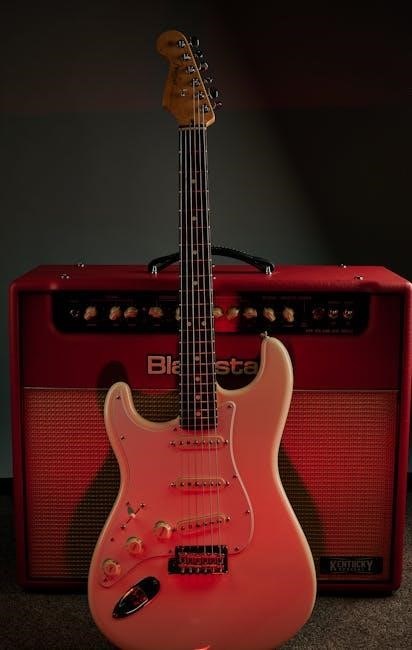
Exploring the Amplifier Voices
The Mustang LT25’s diverse voices—British, Metal, and Tweed—provide a wide tonal palette, enabling players to emulate classic amps and discover unique sounds.
British Voices: Orange and Green Settings
The British voices on the Mustang LT25, specifically the Orange and Green settings, deliver classic rock tones. For the Orange voice, a gain between 2 and 3, with Treble and Bass at 5, provides a warm, crunchy sound, enhanced by subtle reverb. Increasing the gain to 5 introduces noticeable distortion.
Alternatively, the Green voice benefits from a brighter approach; setting the Treble to 7 and Bass to 3 yields a more articulate tone. These British settings are particularly effective when utilizing the neck pickup, maximizing warmth and sustain. Experimentation is key, as the LT25 encourages tonal exploration, allowing players to continually discover new sounds and preferences.
Optimizing Gain, Treble, and Bass for British Tones
Achieving authentic British tones on the Mustang LT25 requires careful adjustment of Gain, Treble, and Bass controls. Starting with a moderate Gain setting (around 2-3) provides a foundation for classic crunch. Increasing Treble enhances clarity and articulation, while Bass adds fullness and warmth.
For a more aggressive sound, incrementally increase the Gain, but be mindful of potential muddiness. Balancing Treble and Bass is crucial; too much Treble can sound harsh, while excessive Bass can overwhelm the mix. Experiment with slight adjustments to find the sweet spot for your guitar and playing style. Remember, the neck pickup complements these settings, delivering richer harmonics.
Metal Voices: Red, Green, and Black Settings
The Mustang LT25’s Metal voices – Red, Green, and Black – unlock a spectrum of high-gain distortion. The Green setting offers a balanced, aggressive tone, ideal for rhythm playing. A Gain setting of 5, coupled with Treble at 7 and Bass at 3, delivers a focused, cutting sound. The Red voice provides even more saturation; surprisingly, using no Gain with Treble at 7 and Bass at 3 can yield a clean tone with the middle pickup.

Experimentation is key. The Black setting offers a darker, more scooped tone. Remember to utilize the neck pickup for enhanced sustain and harmonic richness when exploring these high-gain options. Minimal effects often complement these voices best, allowing the core distortion to shine.
Achieving High-Gain Distortion with Metal Voices
To maximize distortion with the Mustang LT25’s Metal voices, focus on Gain and EQ manipulation. Starting with the Green voice, a Gain setting of 5 provides a solid foundation. Boost Treble to 7 for clarity and articulation, while reducing Bass to 3 prevents muddiness. For a more aggressive edge, explore the Red voice, but surprisingly, a zero-Gain setting with adjusted Treble (7) and Bass (3) can create a unique, high-volume clean tone.
Experiment with the Black voice for darker tones. Remember, the neck pickup enhances sustain and harmonic content, complementing high-gain settings. Keep effects minimal to showcase the core distortion. Fine-tune these parameters to match your guitar and playing style for optimal results.
Tweed Voices: Classic American Clean Tones
The Fender Mustang LT25’s Tweed voices deliver warm, vintage-inspired clean tones reminiscent of classic American amplifiers. To unlock their potential, begin with the Green Tweed voice and a Gain setting of 5. Increase Treble to 7 for sparkle and definition, while significantly reducing Bass to 1 to avoid a boomy sound. Adding a touch of reverb enhances the spaciousness and depth of these tones;
Utilize the neck pickup for maximum warmth and sustain. These settings are ideal for blues, country, and rockabilly styles. Experiment with subtle variations in Gain and EQ to tailor the Tweed voices to your specific guitar and musical preferences, achieving authentic vintage character.
Utilizing Tweed Voices for Warm, Vintage Sounds
To truly harness the warm, vintage character of the Fender Mustang LT25’s Tweed voices, focus on subtle nuances in your playing and settings. The neck pickup is paramount, providing a full, rounded tone that complements the Tweed’s inherent warmth. Experiment with fingerstyle playing or a lighter pick attack to emphasize clarity and sustain.
Remember the recommended settings – Gain at 5, Treble at 7, and Bass at 1 – as a starting point. Adjust the reverb to taste, adding just enough to create a sense of space without washing out the signal. These voices excel at creating a classic, Americana sound, perfect for blues, jazz, and roots music.

Pickup Selection and Tone Shaping
Strategic pickup choices dramatically alter the Mustang LT25’s sound; the neck offers warmth, the bridge provides brightness, and the middle delivers balanced tones.
Neck Pickup Settings for Warmth and Sustain
The neck pickup on the Fender Mustang LT25 excels at producing warm, rounded tones ideal for blues, jazz, and softer rock styles. Utilizing settings like a Gain between 2 and 3, paired with the British (Orange) voice, and Treble and Bass both at 5, creates a smooth foundation. Experimenting with the British (Green) voice, boosting Treble to 7 and reducing Bass to 3, also yields pleasing results.
For a high-gain approach, the Metal (Green) voice with a Gain of 5, Treble at 7, and Bass at 3 delivers powerful sustain. Surprisingly, even the Metal (Red) voice can achieve clean tones with no Gain, a Treble of 7, Bass of 3, and increased volume, particularly when using the middle pickup. The neck pickup consistently provides a rich, full sound across various amp voices and effect combinations.
Bridge Pickup Settings for Brightness and Attack
The bridge pickup on the Fender Mustang LT25 delivers a brighter, more focused tone, perfect for country, funk, and heavier rock genres demanding clarity and bite. While specific bridge pickup settings weren’t explicitly detailed in the provided text, extrapolating from the neck pickup recommendations suggests adjustments for increased presence.
Experimenting with higher Treble settings, potentially around 7 or even higher, coupled with moderate Bass levels (around 3-4), will likely accentuate the bridge pickup’s natural brightness. Utilizing the Metal voices, particularly the Red setting with increased Gain, can unlock aggressive, distorted tones. Remember to adjust the overall volume to taste. The bridge pickup’s inherent attack makes it responsive to picking dynamics, allowing for expressive playing styles. Explore combinations with effects like chorus or delay to further enhance its character.
Middle Pickup Settings for Balanced Tone
The middle pickup on the Fender Mustang LT25 offers a balanced tonal character, bridging the gap between the warmth of the neck and the brightness of the bridge. The provided information highlights a surprising application: achieving clean tones with the middle pickup using the Metal (Red) voice and no gain; This configuration, paired with a Treble setting of 7 and Bass at 3, with slightly increased volume, yields a surprisingly articulate clean sound.
However, the middle pickup’s versatility extends beyond this. Experiment with moderate Treble and Bass settings (around 5-6) across various amp voices to find a sweet spot. It’s an excellent choice for rhythm playing, providing a full and even tone. Consider subtle reverb additions to enhance its depth and sustain. The middle pickup excels at blending with effects, offering a solid foundation for layered sounds.

Effects and Reverb Options
The Mustang LT25 features built-in effects like chorus and delay, alongside versatile reverb settings, allowing players to add depth, space, and texture to their sound.
Reverb Settings for Adding Depth and Space
The Fender Mustang LT25’s reverb options are crucial for enhancing your tone, adding a sense of atmosphere and dimension. Experimenting with different reverb settings can dramatically alter the perceived space around your guitar signal. A subtle reverb, achieved with lower settings, can provide a natural ambience, simulating a small room.
Increasing the reverb level creates a larger, more expansive sound, reminiscent of a concert hall or cathedral. For Tweed voices, a touch of reverb complements the warm, vintage tones beautifully. When utilizing metal voices, a moderate reverb can prevent the high-gain distortion from sounding too harsh or sterile. Don’t be afraid to explore and find the reverb level that best suits your playing style and the desired sonic landscape.
Chorus, Delay, and Other Effects
Beyond reverb, the Fender Mustang LT25 boasts a suite of effects to further sculpt your sound. Chorus adds a shimmering, swirling texture, ideal for clean tones and creating a wider stereo image. Delay introduces echoes, ranging from subtle slapback to long, atmospheric repeats, enhancing rhythmic complexity.
Experiment with different delay times and feedback levels to achieve unique sonic textures. The amp also features other effects like phaser, flanger, and tremolo, offering a diverse palette for creative exploration. Combining effects can yield interesting results – for instance, pairing chorus with delay for a lush, spacious sound. Remember to adjust effect levels to complement your core tone, avoiding excessive processing that muddies the signal.
Advanced Tone Customization
Fine-tune your sound by manipulating gain for distortion control, and precisely adjusting treble and bass frequencies to expertly shape the overall EQ.
Using Gain to Control Distortion Levels
Gain is the primary control for shaping distortion on the Mustang LT25. Lower gain settings, between 2 and 3 with a British (Orange) voice, provide a subtle crunch, perfect for rhythm playing. Increasing the gain to 5 unlocks significant distortion, especially with the Metal (Green) voice, ideal for heavier genres.
Experimenting with gain is crucial; a setting of 5 on the British (Orange) voice delivers a noticeable overdrive. Conversely, utilizing no gain with the Metal (Red) voice, coupled with adjusted treble and bass, can surprisingly yield a clean tone using the middle pickup. Remember, gain interacts dynamically with the selected voice, so explore combinations to discover your preferred distortion character. It’s a journey of sonic discovery!
Adjusting Treble and Bass for EQ Shaping
Treble and bass controls are fundamental for sculpting the Mustang LT25’s tone. For British tones (Green voice), boosting treble to 7 and reducing bass to 3 creates a bright, articulate sound. Conversely, with Tweed voices (Green), a treble setting of 7 and bass at 1 delivers a warm, vintage character.
Metal voices often benefit from a higher treble (7) and lower bass (3) for clarity and punch. Remember, these are starting points; adjust to your guitar and playing style. Experimentation is key! A balanced approach, considering pickup selection, is vital for optimal EQ shaping. Fine-tuning these controls unlocks the amplifier’s full tonal potential, allowing you to tailor the sound to your exact preferences.

Fender Bassman Series Overview
The Bassman 50 excels in rock and punk, offering cranked distortion, while the 100-watt model provides clean headroom, ideal as a pedal platform.
Bassman 50: Rock and Punk Distortion
The Fender Bassman 50 is highly regarded within rock and punk circles due to its ability to achieve a desirable, almost Marshall-like distortion when pushed to higher volumes. This characteristic makes it a favorite among musicians seeking a raw, energetic sound. Its inherent responsiveness to being cranked allows for dynamic playing and expressive tonal control.
However, the bass channel isn’t particularly well-suited for guitar applications, leading many players to explore modifications to optimize its performance for guitar tones. Despite this, the 50-watt head remains a sought-after amplifier, celebrated for its vintage vibe and powerful distortion capabilities. It’s a classic choice for those wanting a gritty, authentic sound.
Bassman 100: Clean Headroom and Pedal Platform
The Fender Bassman 100 distinguishes itself with substantial clean headroom, making it an excellent choice for players who prioritize pristine amplification and rely heavily on effects pedals. While sharing the same preamp circuitry as the 50-watt model, the increased power output provides significantly more volume before distortion sets in. This characteristic makes it ideal for larger venues or band settings where clarity is paramount.
Consequently, it’s often considered less desirable on the used market compared to its 50-watt counterpart, as it doesn’t naturally deliver the same sought-after distorted tones. However, its exceptional clean platform makes it a superb foundation for building a customized sound using a diverse range of pedals.
Market Value and Considerations
Bassman amplifier pricing fluctuates, but current trends suggest a $500 price point for a 100-watt model might be slightly high, though prices are rising.
Current Market Trends for Bassman Amps
The vintage Fender Bassman amplifier market is experiencing a notable upswing in demand, largely fueled by renewed interest in classic rock and punk tones. Specifically, the 50-watt Bassman heads are currently commanding higher prices due to their sought-after, naturally overdriven sound when cranked. These amps are particularly popular among musicians aiming for a raw, dynamic distortion reminiscent of iconic bands.
Conversely, the 100-watt Bassman models, while still valuable, are generally found at lower price points on the used market. This is primarily because their clean headroom makes them less desirable for those seeking built-in distortion. However, they remain excellent platforms for pedal users, offering a pristine canvas for effects. Overall, the market reflects a preference for the 50-watt version’s inherent character.
Factors Influencing Bassman Amplifier Pricing
Several key factors significantly impact the pricing of Fender Bassman amplifiers on the used market. The amplifier’s condition is paramount; units in excellent, original condition command substantial premiums. Modifications, while potentially enhancing functionality, often decrease value unless performed by reputable technicians. The specific model – 50-watt versus 100-watt – plays a crucial role, with the 50-watt versions consistently fetching higher prices.
Rarity and collectibility also contribute, with certain years or limited-edition models being particularly valuable. Location can influence pricing, with demand varying regionally. Finally, broader economic trends and the overall vintage amplifier market contribute to fluctuations. Currently, prices are trending upwards, with a Bassman 100 potentially selling around $500, though this can vary.

Troubleshooting Common Issues
Addressing noise, hum, volume, and tone problems are crucial for optimal performance. Careful examination of connections and components often resolves these typical amplifier challenges.
Addressing Noise and Hum
Unwanted noise and hum can detract from the playing experience. First, ensure all cables are securely connected and of good quality; faulty cables are a common culprit. Try different outlets, as electrical interference from other devices can introduce hum. Grounding issues are also frequent causes – verify the amplifier is properly grounded;
Experiment with moving the amplifier away from potential sources of interference, like computers or fluorescent lights. If the noise persists, inspect the internal components for loose connections or damaged parts. Sometimes, replacing the tubes (if applicable) can resolve the issue. Finally, consider a noise gate pedal as a last resort to suppress unwanted sounds during quiet passages, offering a cleaner signal.
Resolving Volume and Tone Problems
Inconsistent volume or a lackluster tone can hinder performance. Begin by checking the input jacks and speaker connections for looseness or damage. Verify the volume and tone controls are functioning smoothly and aren’t scratchy, indicating potential potentiometer issues. If one pickup sounds significantly quieter than others, investigate its wiring and height adjustment.
A weak or muffled tone might stem from old or failing tubes (if applicable), requiring replacement. Ensure the speaker isn’t damaged or blown. Experiment with different cable lengths and types, as some can affect signal strength. If problems persist, a qualified technician should inspect the amplifier’s internal circuitry for component failures or wiring faults.